
Every autumn and early winter, the Greek countryside comes alive as the olive harvest season begins. This is not simply an agricultural task repeated each year, but a deeply rooted cultural ritual one that brings together locals and visitors alike in a shared, hands-on tradition. If you're looking for an authentic experience combined with a refreshing getaway a chance to connect with nature while discovering the heritage of the olive tree and the process behind its harvest then this is your invitation to step into a uniquely Greek way of life.
Harvest Seasons and Cycles in Greece
Although the olive harvest follows a general timeframe typically from late September through January the exact timing varies depending on several factors. These include the type of olive oil being produced and the specific olive varieties cultivated in each region. Each olive grove follows its own natural rhythm. Some trees bloom earlier, others mature later, which means the harvest may begin sooner or be delayed depending on climate, location, and cultivation practices. But timing is not only about nature it’s also about flavor.
The taste profile of olive oil shifts depending on when the olives are picked. If a producer is aiming for a more robust, slightly bitter oil, the harvest will begin earlier. For a smoother, milder flavor, the olives are left to ripen longer. More specifically, from early October to late November, producers carry out what is known as the early harvest, producing agourelaio oil made from unripe, green olives at the very first stages of maturation. On the other hand, the most common harvest period takes place when the olives are fully ripe, shifting in color from green to a soft purple hue. At this stage, both the quantity and quality of the oil reach their peak.
Harvesting Techniques: From Tradition to Technology
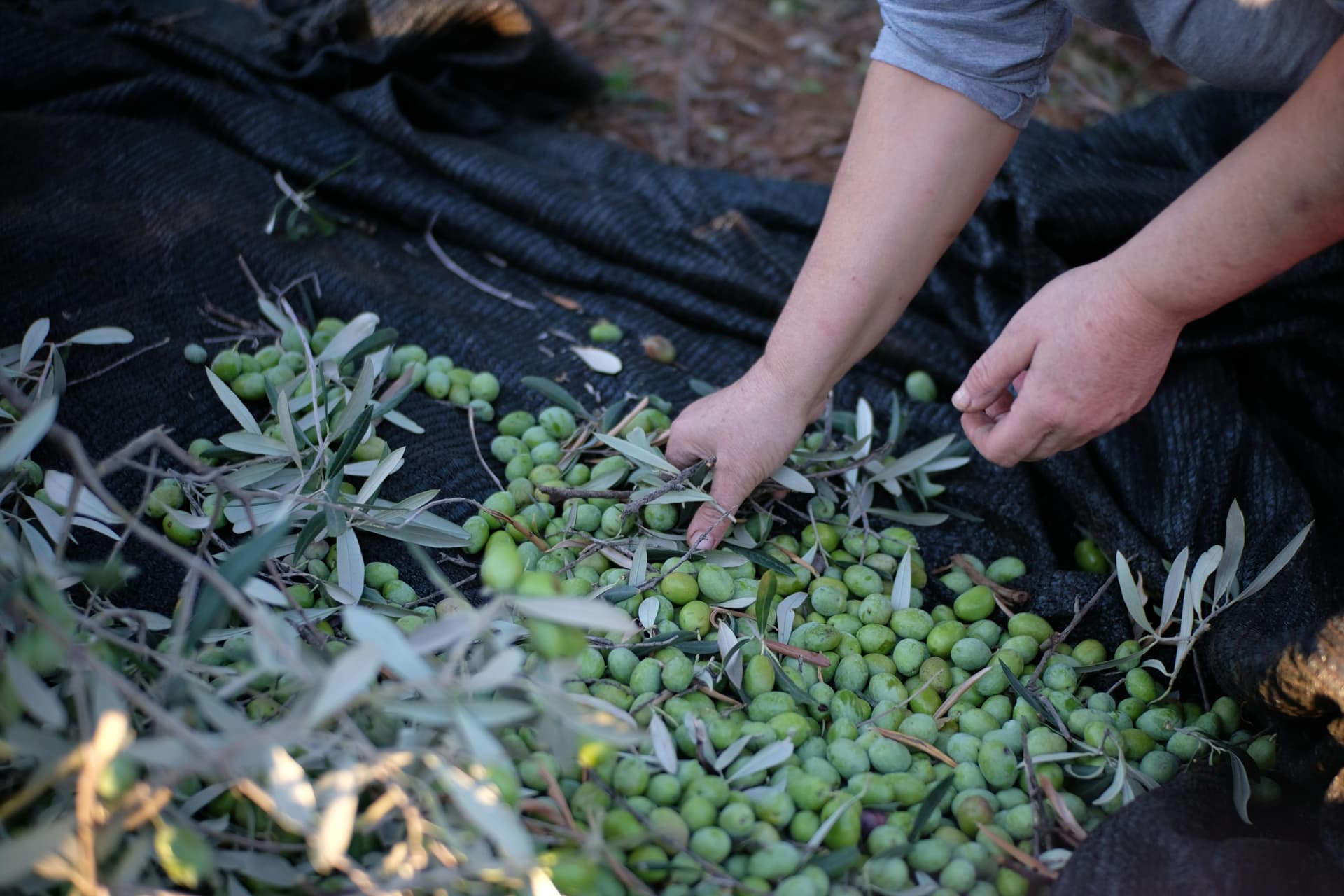
Olive harvesting methods vary widely, depending on the available tools and the desired outcome. The most traditional — and arguably the most delicate — method is hand-picking. While it may seem simple, it allows each olive to be collected carefully, minimizing damage and preserving quality. A more common technique you’ll encounter is “raking” or “beating” the branches, where flexible rods are used to gently tap the tree so the olives fall onto nets spread beneath. This method requires skill, as both the tree and the fruit must be protected during the process.
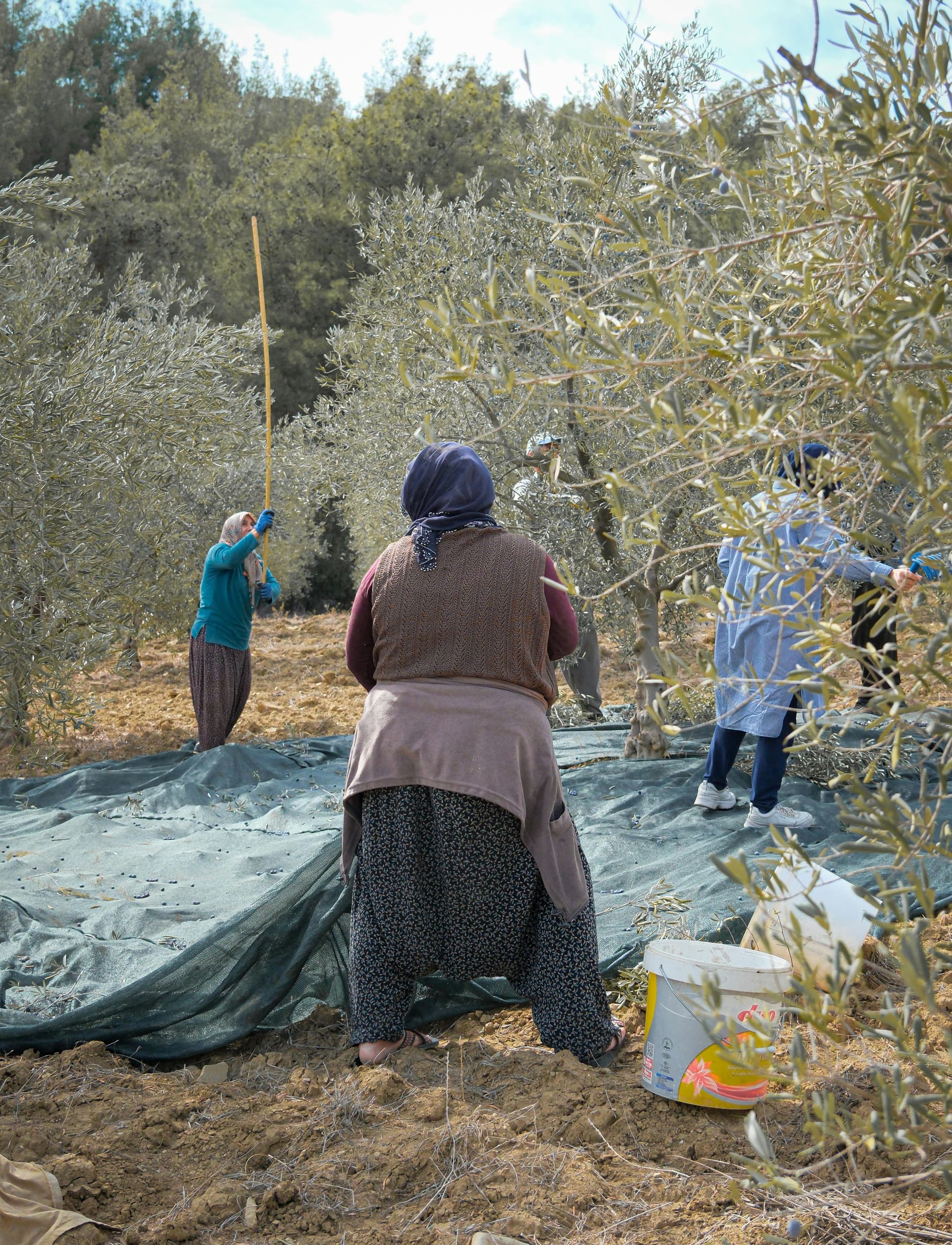
Another widely used approach involves special comb-like tools, which “brush” the olives off the branches with controlled movements. Finally, modern agriculture has introduced mechanical harvesters, which gently shake the tree trunks or branches, allowing the olives to fall more quickly. This method significantly speeds up the process and reduces labor needs, though it is typically used in larger-scale operations. Each producer chooses their method based on their priorities. For example, olives intended for direct consumption are often hand-picked to ensure their perfect condition, while others destined for oil production may be harvested using faster techniques.
If all this has sparked your curiosity, you’ll be pleased to know that Greece offers countless opportunities to take part in the olive harvest yourself. As one of the world’s leading olive oil producers, the country relies heavily on seasonal labor — and many producers welcome visitors to join in.
Some of the best destinations for this experience include regions with a long-standing tradition in olive cultivation, such as Crete, Kalamata, parts of Laconia, Magnesia, and olive-rich islands like Lesvos and Corfu. In these areas, farms and olive mills often organize oleotourism experiences, combining harvesting activities with workshops, tastings, cooking sessions, and storytelling around olive oil culture. Some even offer multi-day stays, allowing guests to live among the olive groves, participate in daily tasks, and fully immerse themselves in rural life.
Across Greece, local communities and cooperatives also invite visitors to join harvest celebrations and seasonal festivals. For example, the Olive and Olive Oil Festival in Kranidi (Argolis) features games and activities for all ages, while the Olive Oil Festival in Naxos includes guided tours, talks, and traditional dances. In Kissamos (Chania), the “Elaia” festival celebrates olive oil through food competitions and cultural events. Even in Athens, you can take part in this tradition. Initiatives such as the olive harvest in Alimos, community activities at the Stavros Niarchos Foundation Cultural Center, or even the small olive grove near the Acropolis offer a unique urban twist to this ancient practice.
Why You Should Experience It
No matter which experience you choose, participating in the olive harvest offers valuable insight into the care and management of olive trees, ensuring both sustainability and future productivity. You’ll learn about cultivation techniques, harvesting tools, and the life cycle of the olive tree gaining a deeper appreciation for the journey from fruit to oil.
Beyond the educational aspect, however, lies something even more meaningful.
Taking part in the olive harvest connects you to a centuries-old tradition, one that reflects not only agricultural knowledge but also cultural identity. It’s a social experience, too. You’ll share moments with fellow travelers, locals, and producers, exchanging stories, recipes, and laughter. Whether you spend a few days living among the olive groves or simply join for a day of harvesting, the sense of community and hospitality is unmistakable. It’s an experience that goes far beyond tourism it becomes personal.
If you find yourself in Greece during harvest season, take the time to become part of this timeless ritual. It’s more than an outdoor activity it’s an opportunity to reconnect with nature, engage with local communities, and understand a living tradition that has shaped Greek culture for centuries. And as you leave, you won’t just carry a bottle of exceptional olive oil with you but also memories, knowledge, and a deeper connection to the land that produced it.